Turn controlled letters into readable small compositions.
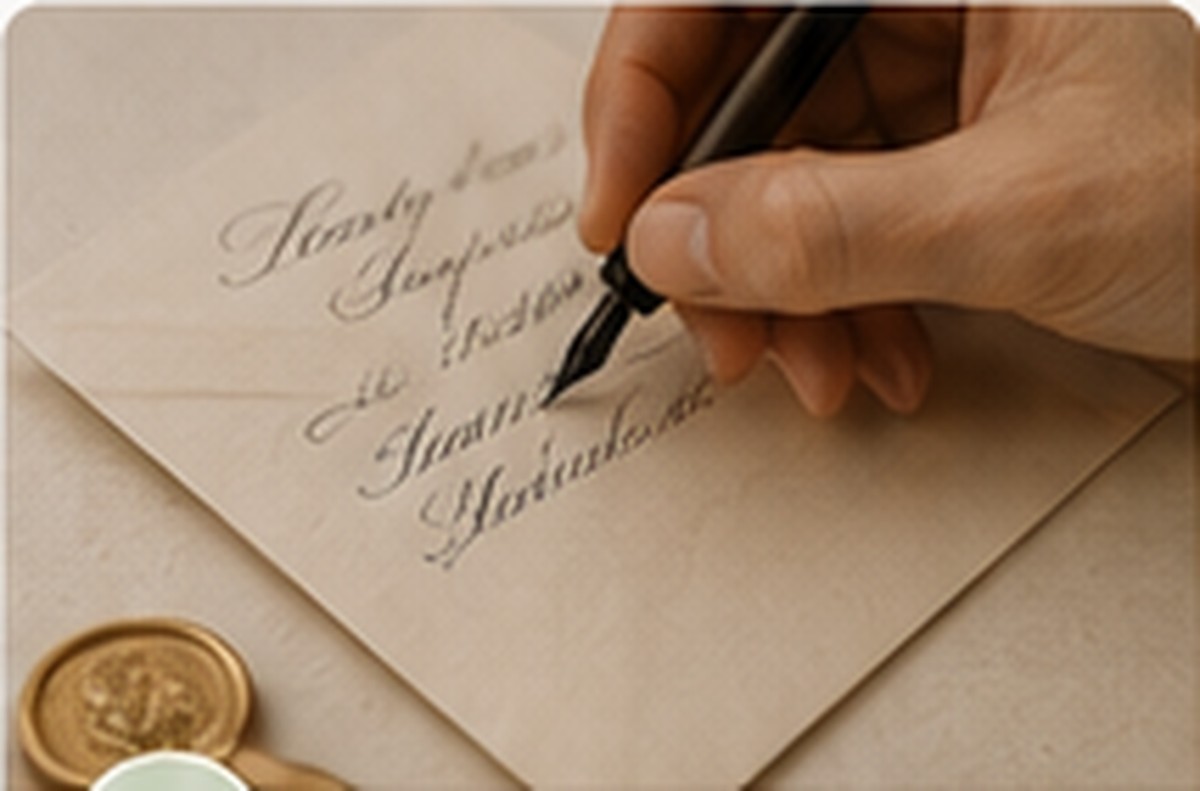
Word rhythm
Correct crowded pairs one at a time.

Card balance
Test margins before decoration.

Small-format restraint
Keep flourishes away from reading space.
From isolated words to a small finished piece
Composition exercises use short texts because a small amount of language makes spacing and hierarchy easier to inspect. Typical tasks include a name card, a two-line note, a short quotation or a gift tag.
Thumbnail first
Before using ink, make several tiny pencil layouts. Change line breaks, alignment and the amount of empty space. The purpose is not artistic sketching; it is to make structural decisions cheaply before committing to the final sheet.
Spacing by visual mass
Equal measured gaps do not always look equal. Rounded, narrow and flourished forms occupy space differently. Learners compare the visual gap between words and letter groups, then make small optical adjustments.
Decoration comes last
Flourishes are introduced only after the text reads clearly. A diagnostic exercise asks whether a flourish supports the shape of the empty space or competes with the words.